

American Magazine: Trump Has Yet to Present a Clear and Logical Reason for War with Iran
Rokna Political: Foreign Policy stated in a report that the Trump administration has not yet provided a clear and logical justification for the option of war with Iran, and critics have questioned this approach.
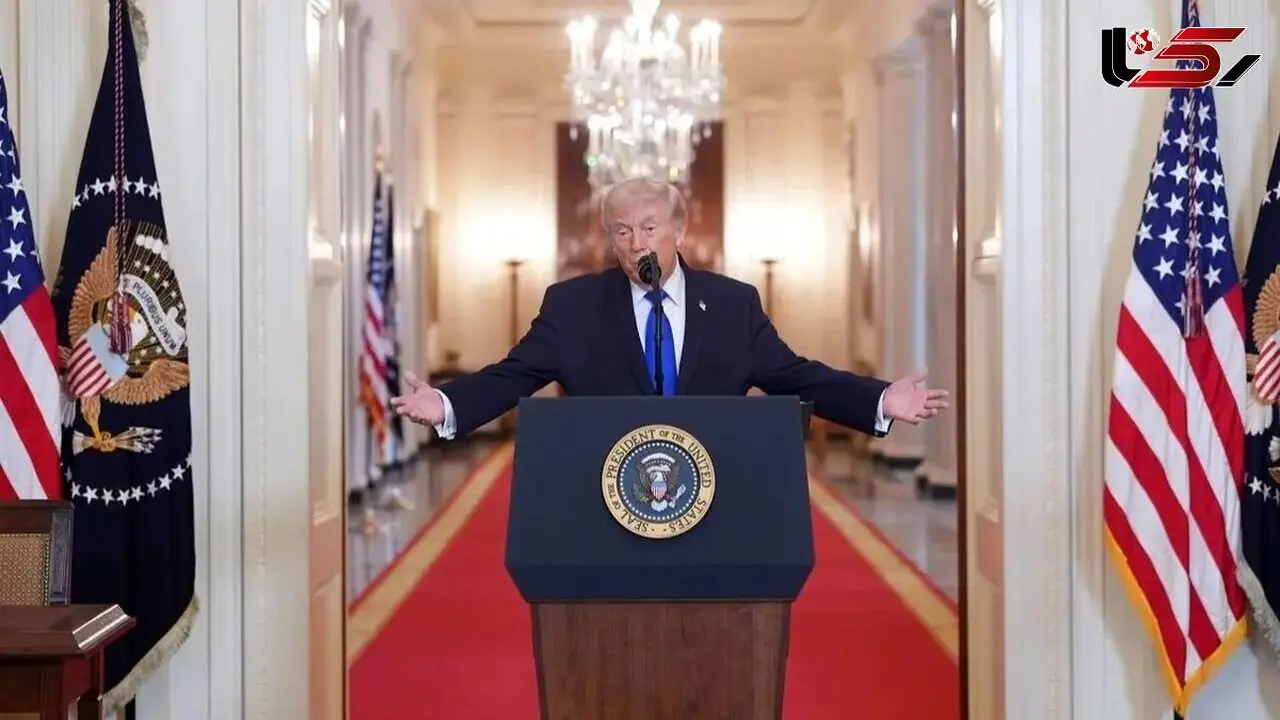
According to Rokna, a section of the report by this American publication states: The debate over the reasons and justifications for such an action has increasingly intensified. The decision to send American forces to war is among the most important and weighty responsibilities of any President of the United States, and part of this responsibility is persuading public opinion regarding the rationale behind such a decision.
Critics argue that the Trump administration has so far failed to present a comprehensive and clear explanation of the potential objective behind a confrontation with Iran. Some officials have spoken of efforts to compel Iran to reach a nuclear agreement, while others have even referred to regime change in Iran. However, no coherent framework has yet been offered to justify a possible war.
A review of historical experience indicates that previous U.S. presidents have sought to rally public opinion and Congress before entering into war. Franklin D. Roosevelt, on the eve of the United States’ entry into World War II, gradually prepared public opinion despite the isolationist tendencies within society.
He implemented the “Lend-Lease” program to assist Britain and introduced the first peacetime conscription, thereby preparing the country for war; while at the same time emphasizing that the United States would not enter a foreign war. Japan’s attack on Attack on Pearl Harbor ultimately paved the way for the formal entry of the United States into the war.
Lyndon B. Johnson, during the Vietnam War, also obtained broad authorization from Congress for military action following the Gulf of Tonkin incident.
He argued that an American withdrawal would undermine the country’s credibility and lead to the spread of communism in Asia—an argument that later became known as the “domino theory.” However, as the war prolonged and casualties mounted, public support declined.
In the case of George W. Bush, his administration made extensive efforts to persuade Congress and public opinion by focusing on claims regarding the existence of weapons of mass destruction in Iraq. Although these arguments initially garnered broad support, the legitimacy of the war was later called into question after it became clear that such weapons did not exist.
Send Comments