

Araghchi’s Response to Trump Regarding Iran’s Long-Range Missiles
Rokna Political Desk: Seyed Abbas Araghchi, Iran’s Foreign Minister, responded to the U.S. president’s remarks about Iran’s long-range missiles in an interview with the program “India Today.”
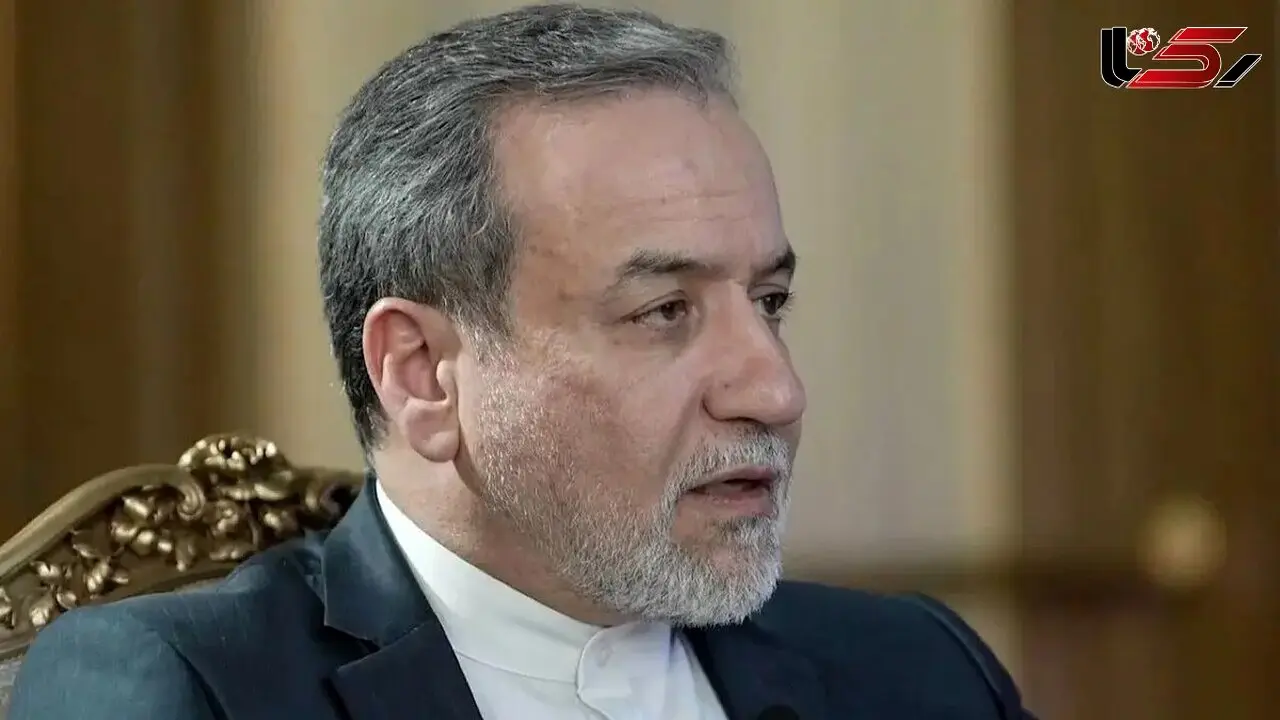
The full text of the interview of the Foreign Minister of the Islamic Republic of Iran with this Indian media outlet is as follows:
Let me begin with President Trump’s State of the Union address — his longest speech — in which he warned Iran. Is Iran prepared?
First of all, thank you for your invitation. In response to your question, of course we are prepared. We are fully prepared for both options: war and peace.
As you know, this afternoon I am heading to Geneva to hold our third round of talks with the American team. In the previous round, we made progress. We were able to reach a certain understanding, and I believe that based on those understandings we can build something in the form of an agreement — a deal.
In my view, reaching a fair, balanced and just agreement is possible, and we can achieve it. Of course, our armed forces are ready to carry out their duty, and we know how to defend ourselves — as we did last time. We learned many lessons from the previous war, and therefore we are now more prepared.
In fact, this means that the goal is to prevent war. When you are prepared for war, you can prevent it; otherwise, you invite it into your home. So we are fully prepared, not because we seek war, but because we want to prevent it. I am a man of diplomacy. I must speak about my own work, and I believe the path we have taken is the best possible way to resolve this issue. There is no military option for Iran’s peaceful nuclear program. If there is any concern, if there is any question, if there is any ambiguity, we are ready to address it. We are ready to answer questions. We are ready to remove concerns. But we are not prepared to give up our right to the peaceful use of nuclear technology. This is our position and our demand. Therefore, I believe that tomorrow in Geneva there is an opportunity to reach a mutually agreed, fair and balanced solution.
The U.S. president, who is unlike any of his predecessors, clearly stated in his State of the Union address that Iran is developing missiles capable of reaching the United States. In the negotiations, one of the conditions has been that there be no enrichment. Where exactly does this missile claim come from?
In my view, unfortunately, he himself has now become a victim of fake news. We are not developing such missiles. We have deliberately limited the range of our missiles to 2,000 kilometers. This is solely for our own defense. Our missiles are defensive in nature; they are built purely for deterrence and to help us defend ourselves, exactly as they did last June. We were not the initiators of that conflict; it was the Israelis and then the Americans. We only defended ourselves. From their perspective, it may be considered illegal, but from our perspective, it was a legitimate act within the framework of self-defense.
You speak about Qatar, Saudi Arabia and the United Arab Emirates. There are bases there. But they have explicitly stated that they will not allow their territory, airspace or waters to be used. No one in this region wants war. Yet it seems President Trump views the matter more through Netanyahu’s lens than through that of his allies in the Middle East?
This is the position adopted by all countries in the region. You are referring to our Arab friends and other regional countries that have clearly stated they oppose war and do not want such an event to occur.
Yes, there are American bases in the territory of some of them. They have assured that they will not allow their land, waters or airspace to be used against Iran — to the extent that they can control it. I do not know to what extent that can be controlled.
We appreciate their positions and hope this situation continues. But if — God forbid — the United States decides to attack us, its bases in the region will be legitimate targets; and these are American bases. We consider them American bases, not the soil of our neighbors or the territory of any other country.
As last time, we had no choice but to strike the American base in Qatar. I immediately contacted my dear brother, the Foreign Minister of Qatar. Even before the attack, I spoke with him and informed him, saying: Please, my brother, be aware that this attack is not against Qatar. This attack is against the American base that is unfortunately located in Qatar. We explained and tried to ensure that it was understood that this action was not directed against our brotherly country, Qatar.
Send Comments