

“Strait of Hormuz Closure Could Threaten 2 Million Barrels of Oil to China”
Rokna Political Desk: Although official customs data indicate that China has not imported Iranian oil since mid-2022, shipments are being transported through opaque trading networks and a “dark fleet” of mostly older tankers.
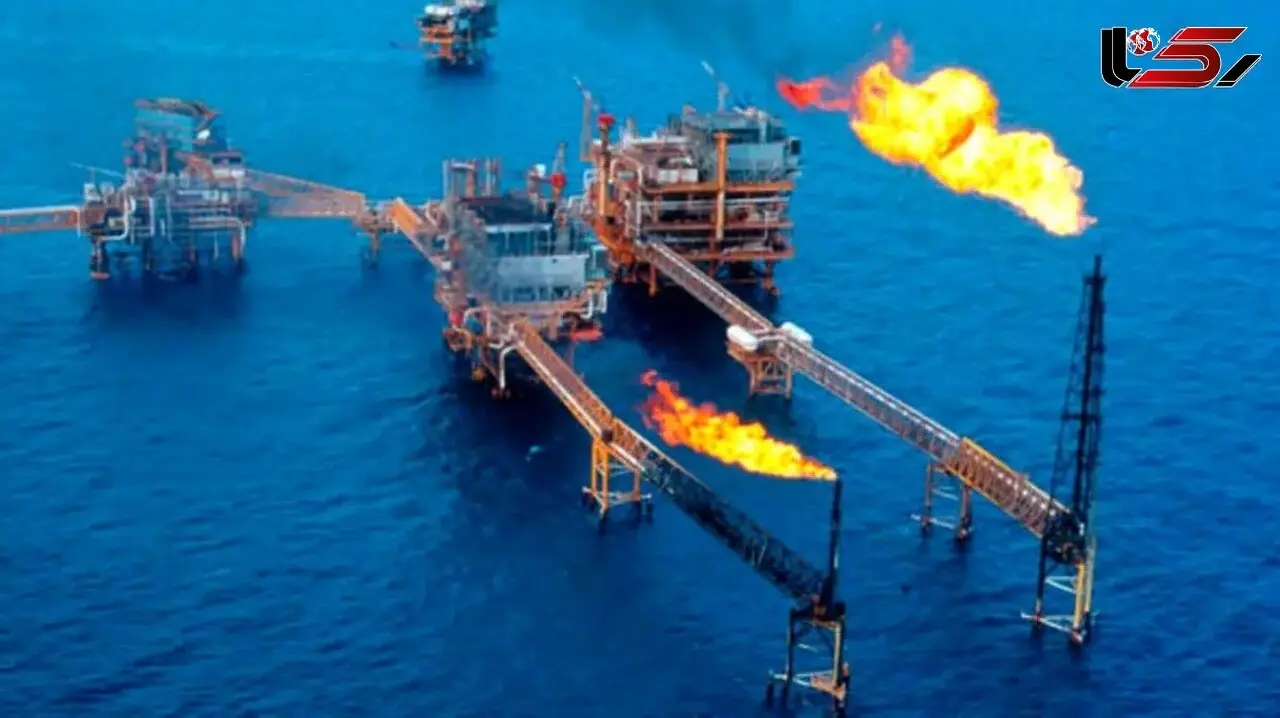
According to Rokna, Bloomberg reported that rising tensions between the United States and Iran have pushed oil prices to their highest levels in the past six months. Oil traders are anticipating any scenario that could disrupt Iran’s oil production or force the Iranian government to block a vital transportation route used by several major regional energy exporters.
Bloomberg further noted: The United States has deployed a large number of military forces in the region, and President Donald Trump has stated that he is considering a limited strike on Iran to pressure the Iranian government into quickly reaching an agreement to curb its nuclear program. An attack — or an Iranian action to restrict access to the Strait of Hormuz, through which about one-quarter of the world’s seaborne oil passes — could have significant consequences for global oil markets.
How Significant Is Iran’s Oil Industry?
Iran’s influence in recent years has declined due to prolonged sanctions and limited investment. Overall, the country supplies about 3% of global oil supply, producing approximately 3.3 million barrels per day.
Iran is the Fourth-Largest OPEC Producer
OPEC Member Share of Total Oil Production, January 2026:
-
Saudi Arabia: 35%
-
Iraq: 15%
-
UAE: 12%
-
Iran: 11%
-
Kuwait: 9%
-
Others: 18%
Who Buys Iran’s Oil?
Despite international sanctions, Iran currently sells nearly 90% of its oil exports to China, supplying it to independent refineries at steep discounts.
Although official customs data indicate that China has not imported Iranian oil since mid-2022, shipments are being transported through opaque trading networks and a “dark fleet” of mostly older tankers. According to data from the analytical and vessel-tracking company Kpler, these flows reached approximately 1.25 million barrels per day in January, compared to 898,000 barrels per day last year.
Other countries that continue to purchase Iranian cargoes include Syria.
How Could a New Conflict Affect Global Oil Markets?
A large portion of Iran’s production — up to 2 million barrels per day — is destined for Chinese refineries, which would need to seek alternative sources if this production were seriously disrupted.
However, the bigger risk is the threat to the Strait of Hormuz, the backbone of global oil supply, through which Saudi Arabia, Iraq, the UAE, and Qatar export a significant portion of their oil.
Why Is the Strait of Hormuz So Important?
The Strait of Hormuz is a narrow waterway connecting the Persian Gulf to the Arabian Sea. The Iranian government has previously stated that it has the capability to impose a maritime blockade during periods of geopolitical tension, although it has not effectively closed this route. If this vital route is disrupted, oil, liquefied natural gas, and petrochemical gas exports from Iraq, Kuwait, Saudi Arabia, and the UAE would be at risk.
Key Data:
-
Approximately 16.5 million barrels of oil per day pass through this strait, including the majority of Iranian exports.
-
Saudi Arabia has the highest exports through this route (around 5 million barrels per day) but can divert shipments using its 746-mile east-to-west pipeline to a port on the Red Sea.
-
The UAE can also transport 1.5 million barrels per day via a pipeline that terminates in the Gulf of Oman.
Closure of the Strait of Hormuz would likely disrupt oil flows from the Middle East to Asia. Last June, when regional tensions escalated during a 12-day conflict between Israel and Iran, the supertanker crude oil shipping rate from the Middle East to China surged sharply.
How Important Is Oil for Iran’s Economy?
Oil exports remain a cornerstone of Iran’s economy despite years of efforts to reduce dependency on oil and diversify into heavy industries, textiles, and mining.
The oil sector contributed approximately 2 percentage points to Iran’s GDP growth in 2023 — a year in which the economy grew by around 5% — highlighting the sector’s impact on overall growth.
Despite sanctions forcing Iran to sell oil at steep discounts relative to international benchmarks, the country still earned around $2.7 billion in November at a price of only $45 per barrel after transportation and other costs.
However, Iran’s oil revenue could face further pressure if Trump’s “maximum pressure” campaign — comprising a series of U.S. sanctions since the start of his presidency — deters Chinese buyers. Revenues could also be pressured further if the Iranian government reduces prices to compete with heavily discounted Russian oil.
Send Comments