

Countries Briefed on Iran-U.S. Negotiations
Rokna Political Desk: While Geneva is hosting the third round of Iran-U.S. nuclear talks mediated by Oman on Thursday, Iran, as in previous rounds, has briefed several regional countries as well as China and Russia on the progress of these negotiations.
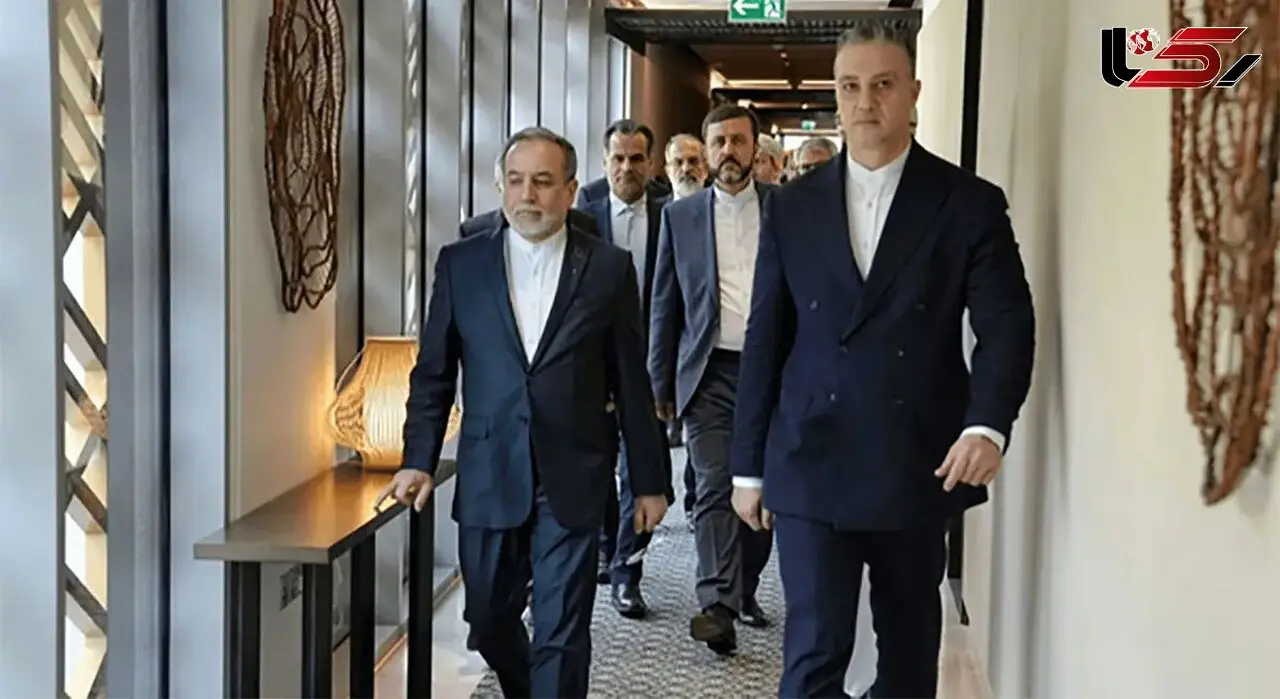
According to Rokna, the third round of indirect Iran-U.S. nuclear negotiations is scheduled for Thursday, 7th of Esfand (February 26), chaired by Iranian Foreign Minister Seyed Abbas Araqchi and U.S. Special Representative for Iran, Steve Witkoff, with Oman acting as mediator. This will be the second session in Geneva following a gap of approximately ten days. Iran has briefed several regional countries, including Russia and China, on the progress of these negotiations.
These talks, the first round of which was held on 17th Bahman 1404 (February 6) in Muscat, and the second on 28th Bahman (February 17) in Geneva, were initiated as part of regional efforts to reduce tensions and following Iran’s agreement to engage.
Drafting Underway
As stated by Ismail Baghai, spokesperson for the Ministry of Foreign Affairs, during the weekly press briefing on Tuesday, 4th Esfand (February 20): “We are currently in the process of drafting our positions, and we hope that within the next two to three days, in the session that has been announced with the presence of Mr. Araqchi, we can hold another round.” He also added: “We are engaged in drafting and consolidating our positions regarding all aspects of a potential agreement.”
Earlier, Foreign Minister Seyed Abbas Araqchi told CBS that “we are working on the elements of an agreement and drafting texts. I hope that when we arrive there, we will be ready to engage in discussions based on those drafts.”
China and Russia
Briefing regional countries on the negotiation process has been done in previous rounds as well, and following the talks on Tuesday, 28th Bahman (February 17), Iran also briefed Russia and China, both members of the JCPOA, on the process. In this context, the Chinese and Russian ambassadors in Tehran met with Kazem Gharibabadi, Deputy for Legal and International Affairs at the Ministry of Foreign Affairs, two days later (Thursday, 30th Bahman / February 19) to discuss these negotiations.
Gharibabadi wrote on X: “In a joint meeting with the ambassadors of the Russian Federation and the People’s Republic of China, we discussed the latest developments regarding the nuclear talks in Geneva and some bilateral issues. The three countries will continue close consultations and coordination on important matters within the framework of strategic relations.”
Prior to the first round of these talks in Muscat, Araqchi also traveled to Beijing to convey a message from the Iranian president to his Chinese counterpart.
Phone Call with Lavrov
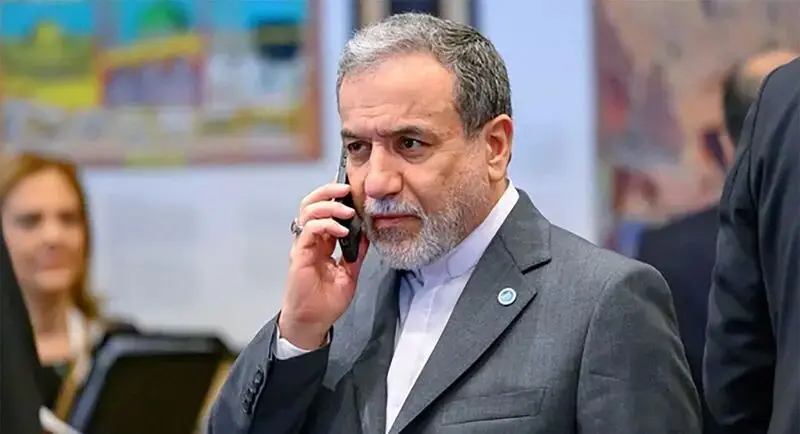
Additionally, Iranian Foreign Minister Araqchi held a phone call with Russian Foreign Minister Sergey Lavrov. On Friday, 1st Esfand (February 21), Araqchi emphasized Iran’s seriousness in advancing the talks to reach a fair and balanced agreement while safeguarding Iran’s rights and interests under the Nuclear Non-Proliferation Treaty. He also updated his Russian counterpart on the latest developments regarding the negotiations.
Following this round, Araqchi also held phone calls with the foreign ministers of Saudi Arabia, Qatar, Iraq, Egypt, Oman, and the United Arab Emirates to brief them on the negotiation process.
Consultation with Faisal bin Farhan
On Wednesday, Araqchi spoke with Saudi Foreign Minister Faisal bin Farhan by phone and briefed him on the progress of the talks. The Saudi foreign minister expressed hope that the ongoing discussions would continue until a result is achieved.
Talks with Egypt and Qatar
On Friday, 1st Esfand (February 21), Araqchi also held a phone conversation with Egyptian Foreign Minister Sameh Shoukry. Shoukry, while supporting the continuation of ongoing diplomatic efforts, stressed the necessity of sustained consultations to reach a framework acceptable to all parties. In a phone call on Saturday, 2nd Esfand (February 22), Araqchi spoke with Sheikh Mohammed bin Abdulrahman Al-Thani, Prime Minister and Foreign Minister of Qatar, emphasizing continued consultations to facilitate and advance the diplomatic process.
Calls with Fuad Hussein and Al-Busaidi
Araqchi also briefed Iraqi Foreign Minister Fuad Hussein on developments related to these negotiations. Hussein reaffirmed his country’s support for the ongoing diplomatic process and expressed hope that the talks would result in favorable outcomes for Iran and contribute to regional peace and stability. During this period, Araqchi also consulted by phone with the Omani foreign minister, the mediator of this round, regarding arrangements for the next round of negotiations.
Talk with the UAE Counterpart
Araqchi’s last phone call was held on the evening of Tuesday, 4th Esfand (February 23), with Sheikh Abdullah bin Zayed Al Nahyan, UAE Foreign Minister, during which he briefed the Emirati counterpart on the progress of the Iran-U.S. nuclear negotiations.
Calls with IAEA Director General Grossi
Since the second round of Geneva talks, Araqchi has held two phone calls with Rafael Grossi, Director General of the International Atomic Energy Agency, who also attended this round. According to Ismail Baghai at the press briefing on Tuesday, 4th Esfand, “Regarding Grossi’s attendance at the next round, this matter is under discussion. I cannot provide a definitive statement yet.”
In the first phone call between Araqchi and Grossi, one day after the Geneva talks, on Wednesday, 29th Bahman (February 16), both sides reviewed the results of the last round of indirect Iran-U.S. talks and discussed the mechanisms and requirements for drafting a negotiation framework.
On Saturday, 2nd Esfand (February 21), Araqchi emphasized Iran’s determination to engage constructively and utilize diplomacy to safeguard the legitimate rights and interests of the Iranian nation in peaceful nuclear energy, in accordance with the NPT and international law.
Prior to the second round of Geneva talks, Araqchi also held consultations with several of his counterparts. During this period, he spoke by phone with the foreign ministers of Iraq, Cyprus, Bahrain, Pakistan, Turkey, Egypt, Saudi Arabia, Oman, and Qatar.
Send Comments